Fuse vs Circuit Breaker in Control Panels
The Real Difference Is Fault Behaviour
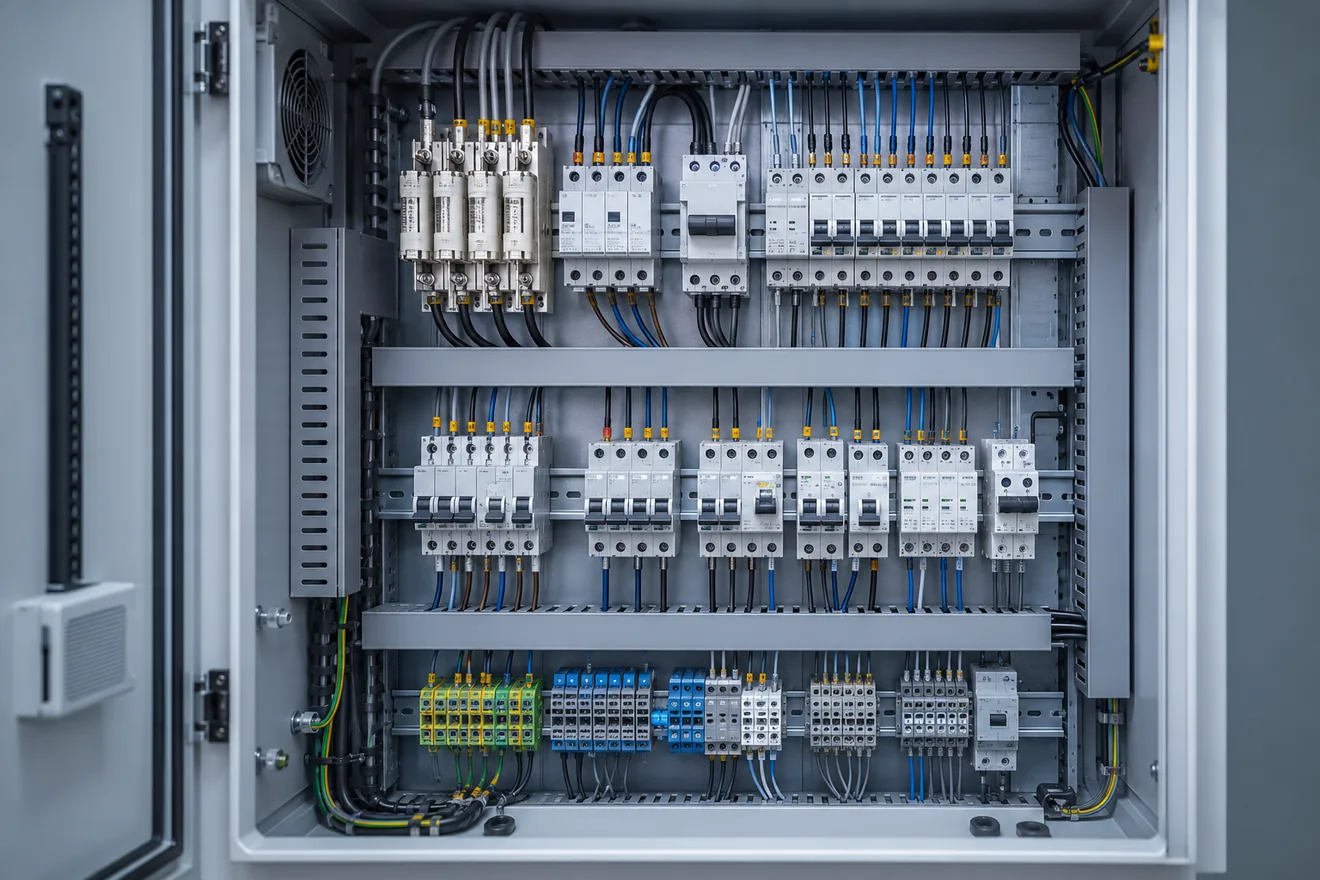
A fuse opens by melting a calibrated element. In the short-circuit region, the right current-limiting fuse can interrupt very quickly and reduce the peak current and let-through energy that reaches downstream conductors and equipment.
A circuit breaker opens contacts through a thermal, magnetic or electronic trip mechanism. It can normally be reset after operation, which is useful for maintenance, but that convenience can become a risk if the circuit is re-energised before the cause is understood.
The comparison is therefore not a simple question of old technology versus modern technology. It is a question of how the protective device behaves during overload, inrush, short circuit, high prospective fault current, repeated operation and cabinet heat.
Fuse vs Circuit Breaker Comparison Matrix
| Engineering point | Fuse | Circuit breaker | Control panel check |
|---|---|---|---|
| Operation after fault | One operation; replacement required. | Usually resettable after inspection. | Do not replace or reset until the cause is identified. |
| Short-circuit performance | Can be strongly current-limiting when selected correctly. | Depends on breaker type, rating and trip mechanism. | Check prospective fault current and interrupting rating. |
| Let-through energy | Often low in high fault regions for current-limiting types. | May allow more energy before clearing, depending on curve. | Consider stress on cables, terminals, contactors and drives. |
| Overload behaviour | Defined by fuse class and time-current curve. | Defined by trip curve or electronic settings. | Match the protective device to load starting and duty cycle. |
| Maintenance evidence | Blown element and holder condition give physical evidence. | Trip indication may disappear after reset. | Record voltage, current, heat and timing before restoring supply. |
| Thermal environment | Holder pressure and cabinet heat affect reliability. | Ambient temperature and grouping can affect trip behaviour. | Look for discolouration, melted plastic, hot terminals and cramped rows. |
| Selectivity | Fuse-to-fuse or fuse-to-breaker coordination can be strong with data. | Breaker coordination depends on curves, settings and manufacturer tables. | Use coordination data, not only different current ratings. |
Which One Fits the Circuit?
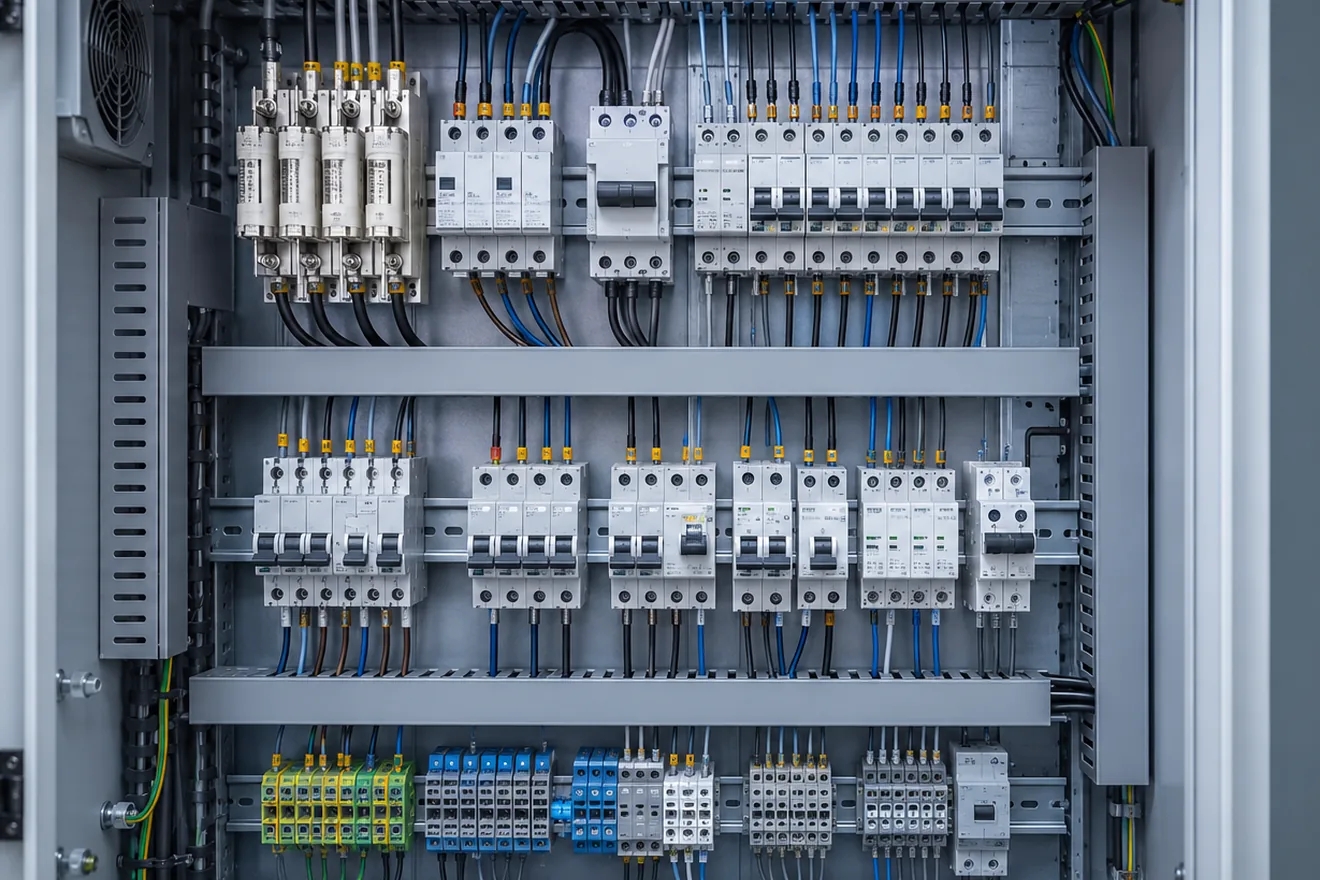
The right device depends on what the circuit must survive. A small control circuit, a transformer primary, a motor branch, a heater bank, a VFD input and a semiconductor load do not create the same protection problem.
Fuses often make sense where high interrupting capacity, current limitation, compact size and predictable one-time clearing are valuable. Circuit breakers often make sense where resettable operation, switching, status indication and routine maintenance access are important.
Neither device compensates for poor circuit design. Wrong conductor size, incorrect voltage rating, low breaking capacity, poor enclosure cooling or weak terminals can make either choice unsafe or unreliable.
Application Decision Table
| Circuit or load | Often favours | Why | Do not ignore |
|---|---|---|---|
| Transformer primary | Fuse or breaker, selected by inrush and fault level. | Transformer energisation can create high inrush without a real fault. | Voltage rating, inrush tolerance and upstream coordination. |
| 24 V DC branch circuits | Miniature breakers, electronic protection or fuses depending on plant practice. | Reset and fault localisation may matter more than one-time replacement. | DC rating, cable length, PSU current limit and branch selectivity. |
| Motor feeders | Application-specific fuse, breaker or motor protective device. | Starting current, overload protection and contactor coordination must be read together. | Coordination type, short-circuit rating and overload relay setting. |
| Heater circuits | Fuse or breaker depending on switching pattern and fault risk. | Heaters can create sustained overloads, insulation faults and high terminal temperatures. | Thermal cycling, terminal pressure and conductor temperature rating. |
| Drives and electronics | Often manufacturer-specified fuses or breakers. | Input rectifiers, DC links and semiconductors can need defined protection. | Follow the equipment data; do not substitute by amp rating alone. |
| Main control panel protection | Device selected by available fault current and panel rating. | The upstream protective device affects the whole panel’s fault capability. | SCCR, interrupting rating and current-limiting data. |
Breaking Capacity, SCCR and Available Fault Current
The most dangerous mistake is comparing devices only by nominal current. A protective device must be able to interrupt the prospective fault current at its installation point. A device with the correct amp rating but inadequate breaking capacity is the wrong device.
In industrial control panels, the available fault current, device interrupting rating, branch protection and short-circuit current rating of the panel should be read together. A current-limiting fuse may improve downstream stress only when the selected device and the downstream components are suitable for that method.
This is where many simple fuse-versus-breaker articles are weak. The real decision is not “which one is better”, but whether the selected protection maintains the required fault rating and coordination for the complete panel.
Before Resetting a Breaker or Replacing a Fuse
| Evidence | Breaker operation | Fuse operation | What it can mean |
|---|---|---|---|
| Trips or blows immediately | Magnetic or instantaneous region may be involved. | High fault current may have cleared the fuse. | Short circuit, insulation fault, wrong device or failed load. |
| Operates after start-up | Trip curve may not tolerate inrush. | Fuse class may not match starting current. | Motor start, transformer inrush, solenoid bank or capacitive load. |
| Operates after warm-up | Thermal trip or ambient derating may be involved. | Holder heat or sustained overload may be involved. | Cabinet temperature, overload, poor ventilation or loose terminal. |
| Only one branch affected | Downstream branch fault likely. | Downstream branch or holder fault likely. | Local cable damage, field device fault or terminal problem. |
| Visible heat marks | Terminal pressure or breaker body heat must be checked. | Fuse clip, holder and conductor must be checked. | High resistance joint, poor contact or overloaded branch. |
Where Fuses Are Strong
Fuses are strong when the protection task needs compact high fault capability, current limitation and predictable one-time clearing. They are common in feeders, transformer circuits, semiconductor protection and applications where let-through energy matters.
The weakness is maintenance control. The correct replacement must be available, the holder must be inspected, the voltage and class must match, and no one should “upgrade” the amp rating to stop nuisance operation.
Where Breakers Are Strong
Circuit breakers are strong where resettable protection, switching function, clear position indication and easy branch isolation are useful. They suit many control and distribution circuits when the selected device has the correct interrupting rating and curve.
The weakness is false convenience. A reset can hide the evidence. Repeated resets can turn an intermittent or thermal fault into damaged wiring, overheated terminals or a failed component.
Selection Sequence
Start with the circuit, not the device. Identify voltage, AC or DC duty, prospective fault current, load type, inrush, conductor size, expected heat, coordination requirement, service practice and manufacturer restrictions. Then compare fuse class or breaker curve, interrupting rating, current limitation, selectivity and what evidence will remain after operation.
Common Questions
Is a fuse better than a circuit breaker?
Neither device is always better. A fuse can be the stronger choice where high fault current, current limitation or very low let-through energy matters. A circuit breaker can be better where resettable protection, switching function and maintenance access are more important.
Can a circuit breaker replace a fuse in a control panel?
Not automatically. The replacement must match the voltage, prospective fault current, breaking capacity, coordination, wiring, heat conditions and any panel short-circuit current rating requirements.
Why should a breaker not be reset immediately?
A trip is evidence of an abnormal condition. Resetting before inspection can hide overload, short-circuit, insulation, terminal, motor-starting or downstream load problems.
What should be checked after a fuse blows?
Check the fuse class, voltage rating, breaking capacity, holder condition, contact pressure, heat marks, downstream wiring and the load that was operating when the fuse opened.
Which device is better for high short-circuit current?
Current-limiting fuses are often strong in high short-circuit conditions because they can restrict peak current and let-through energy. The exact answer still depends on the selected device and manufacturer data.
Do fuses and breakers protect the same faults?
Both protect against overcurrent, but their time-current behaviour, current limitation, reset behaviour and coordination with other devices can be very different.